Hallmarking
What’s a hallmark?
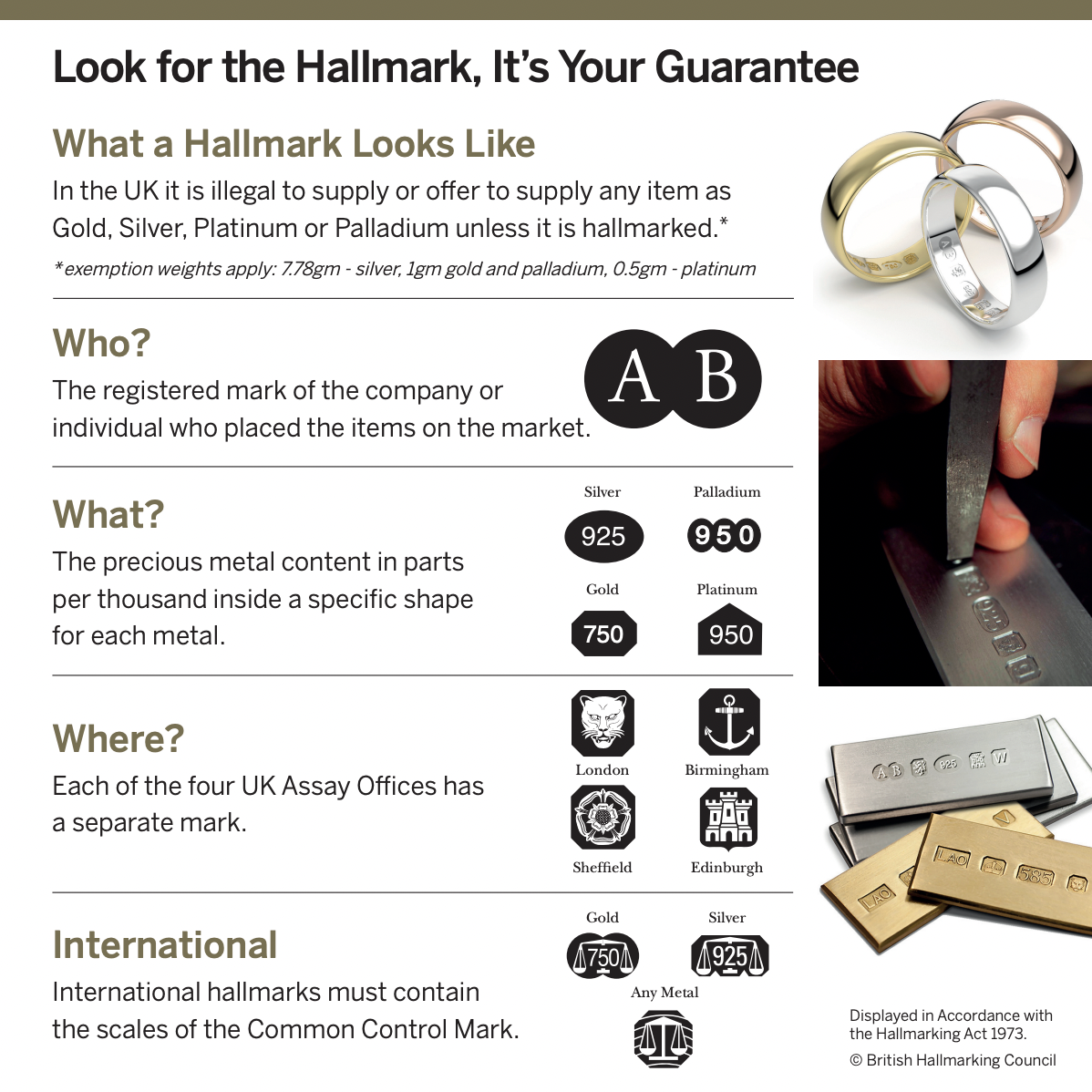
When a piece of jewellery is made from precious metals, it needs to be hallmarked to confirm what it’s made of. A hallmark is an official mark showing that the metal has been tested for purity, so you know exactly what you’re buying. Not all that glitters is gold, after all!
A hallmark can also tell you who made the piece, when it was made and where in the country it was tested. Essentially: it makes it much easier to avoid knock-offs, and to check that the vintage piece you’ve fallen in love with is the real thing.
My piece doesn’t have a hallmark… Why is that?
Good question! Jewellers have been using hallmarks for centuries now, but they haven’t always been required by law.
The Hallmarking Act of 1973 was introduced to help shoppers know exactly what they’re buying. It states that jewellery must legally be hallmarked if it:
was made after 1950
is sold in the UK
is made of gold and weighs over 1g
is made of silver and weighs over 7.78g
is made of platinum and weight over 0.5g
is made palladium and weighs over 1g
If your piece doesn’t have a hallmark, it could be because it doesn’t legally need one. But don’t worry; read on for more on how we check the jewellery we stock is genuine, hallmark or not.
What if a piece is made before 1950?
As stated in the law, jewellery made before 1950 does not need to have a hallmark to be resold. Although some pieces are, in fact much of the antique jewellery we see at AHLQ is unmarked.
To make sure every piece we stock is correctly described, whatever its age, we start with careful sourcing. We only work with well-established auction houses and traders we trust.
Once the jewellery is in our hands, it always undergoes thorough examination. We test the metal and gemstones using industry-standard methods to verify their composition and condition. In absence of a hallmark, we also carefully examine the design, materials and level of wear to identify the likely age.